
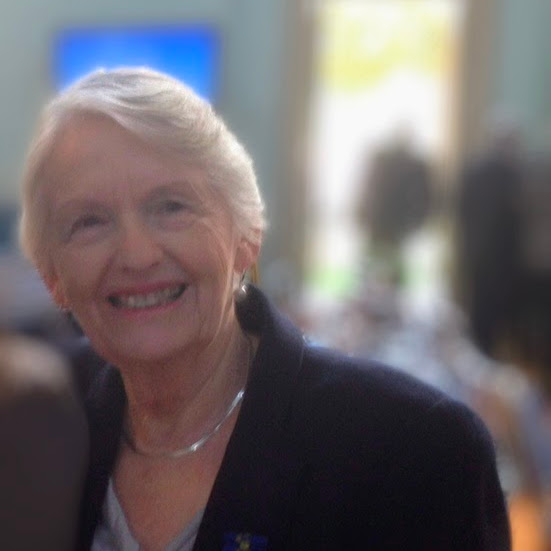
Heather Gardner
My career at the Lincoln Institute began as a senior tutor in the School of Behavioural Sciences in 1983, becoming a lecturer in 1985 and senior lecturer in the School in 1988 when Lincoln was merged with La Trobe University. My former colleague in the Department of Political Science at La Trobe University, Brigid McCoppin, had become a lecturer at Lincoln in 1976 and was largely responsible for my appointment.
My professional journey in the health sciences had begun as a medical laboratory technician specialising in histological research in Oxford and continued under the guidance of Sir Macfarlane Burnet at the Walter and Eliza Hall Institute. To further my academic career, I studied political science and sociology at La Trobe and after completing a BA(Hons), undertook an MA by thesis. The subject of my thesis was a political analysis of the Melbourne a Metropolitan Board of Works (MMBW). The largely forgotten role of the Board of Works is as a public health institution providing a much-needed sewerage system, a clean, reticulated water supply and the prevention of noxious waste entering Melbourne’s water courses, initially at a time when Melbourne was suffering from typhoid and cholera.
I had the privilege of teaching health policy, population health, public health, organisational behaviour, and the sociology of health and illness to health science students across various disciplines at all levels and at three campuses: Slater Street, Abbotsford, and Hytone House in Carlton. With others we oversaw the growth of health sociology and health policy at Lincoln and later at La Trobe. I remember in particular the inaugural cohort of the Bachelor of Nursing program which was a group of dedicated, passionate, and exceptional students.
It has been incredibly rewarding to witness many of them flourish as outstanding researchers, clinicians, and professors. Even more pleasing is when they attribute some of their success to my influence and that of my colleagues at Lincoln. After Lincoln Institute merged with La Trobe University in 1988, I took on the role of Head of the School of Behavioural Health Sciences and became Foundation Head of the School of Public Health in 1997 and later became an Associate Professor.
These were dynamic times in the health sciences, marked by a strong initiative to share knowledge in emerging areas. My first published book, The Politics of Health, was the outcome of a discussion with a colleague at Lincoln on the need for a reference work on health policy for students. He replied ‘well you do it’, so I did. It became a well-regarded book, along with a number of other publications co-edited with colleagues that explored the intersection of public policy and health published by Churchill Livingstone and later Oxford University Press.
These books provided a vehicle both for colleagues and outside experts to share their knowledge. Another important publication was Tradition and Reality: Nursing and Politics in Australia. Together, Brigid McCoppin and I researched, wrote and published a modern political history of nursing in Australia, based on interviews which we carried out throughout Australia. As a founding editor, with my colleagues in various disciplines, we launched a primary health care journal and later another significant publication dedicated to environmental health.
Similarly, I was fortunate to be able with other Lincoln colleagues to teach in the nursing program at the Chinese University of Hong Kong for a number of years. In the development of many specific subjects and courses, I include as significant, the Bachelor of Health Sciences at Lincoln/LaTrobe developed with the School of Human Biosciences and later introduced by many other universities in Victoria and interstate. Also significant was teaching in the postgraduate degrees in public health to Commonwealth Department of Health and Ageing and other public servants, developed in concert with other universities by a former Lincoln academic.
Further, I was appointed to the Board of the Australian Institute of Health and Welfare in Canberra, which is Australia’s premier agency for health and welfare statistics, now part of the ABS. I was also privileged to receive an OAM in recognition of my contribution to public health.
Lincoln Institute provided an exceptional environment for collaboration and was a rewarding experience in my journey within the public health sector. I owe a great deal to Lincoln for shaping my career, but even more for the friendships and encouragement I received from both students and staff.
Heather Gardner OAM BA(Hons) MA FAIEH(Hon) EHA(Life Membership) PHF
 Lincoln Institute of Health Sciences