Uncovering the Legacy of the Lincoln Institute
Beginning
The origin of the Lincoln Institute (later known as the Lincoln Institute of Health Sciences) can be traced back to when the government of Victoria in Australia purchased the Lincoln House building on Swanston Street in Melbourne in 1966 to incorporate the voluntary amalgamation of three educationalschools – occupational therapy, physiotherapy and speech therapy. This building was then let to the amalgamated schools at a peppercorn rent. Each of these schools was affiliated with the Victoria Institute of Colleges, operating under the Victoria Institute of Colleges Act 1965. The Lincoln House officially opened on September 28, 1966, with the ceremony led by the Premier of Victoria, the Right Honourable Henry Bolte. This event was significant as it marked the start of three allied health schools in one location, fostering collaboration and interaction among staff and students.
Physiotherapy education commenced in 1906 in Victoria. However, after the poliomyelitis outbreaks and the health needs of soldiers and civilians after World War II, the need for physiotherapists, occupational therapists, and speech therapists grew. These training programs collaborated closely with medical schools and hospitals, building strong relationships with university professors and healthcare workers to address the emerging health issues in the community.
With the three original schools, the Lincoln Institute of Health Sciences was officially established on December 19, 1972, and recognized as a College of Advanced Education on December 20, 1972, in Melbourne, Victoria, Australia.
Vision
Dulcie Goode, then Head of the School of Occupational Therapy and Patricia Cosh Head of the School of Physiotherapy were instrumental in influencing the development of health sciences from the 1950s, establishing the foundation that elevated the Lincoln Institute to a prominent position by the late 1960s.
Expanding on their previous contributions, Bernard Rechter, in collaboration with Lincoln Institute Board members played crucial roles in further advancing educational reforms and advocating for the advancement of the health professions.
From 1974 to 1987, Bernard Rechter led the Lincoln Institute as its first Director. The Institute became renowned for its exceptional health professional education under his guidance. Rechter’s vision focused on enhancing education, research, and training in health disciplines. His leadership was also distinguished by his proactive enablement of staff and students, and his firm commitment to diversity, equity and inclusion.
The Lincoln Institute stands out for its significant contributions and the leadership of remarkable women. Figures like Patricia Slater, OBE and Professor Judy Parker in nursing, Patricia Cosh and Dr Margaret Naylor in physiotherapy, and Dulcie Goode in occupational therapy exemplify extraordinary vision and innovation in the health sciences, highlighting the vital role women play in this field.
Expansion
Throughout a span of ten years, the Lincoln Institute of Health Sciences broadened its scope by integrating various other professions and fields. It evolved into a centre for a wide range of health-related studies and research. By 1975, the Institute consisted of three schools – Occupational Therapy, Physiotherapy, and Speech Therapy along with three departments – Medical Record Administration, Orthoptics, and Behavioural Science. In 1976, Speech Science was rebranded as Communication Disorders, Orthoptics was elevated to a School, and it added the School of Prosthetics and Orthotics, and two new departments – Biological Science and Educational Resources.
In 1977, the School of Nursing joined the Institute and a year later, the School of Chiropody was established, renamed as the School of Podiatry in 1982. The following year, the School of Medical School Record Administration and Department of Educational Resources merged to form the School of Health Administration and Education. The subsequent year saw the departments of Behavioural Sciences and Biological Sciences upgraded to Schools. In 1987, in response to the needs of Australia’s ageing population, the Institute introduced awards in Gerontology, offered as a multidisciplinary award.
The Schools of the Institute provided a variety of educational programs, including Associate Diplomas, Diplomas, Bachelor and Graduate Diploma degrees. By 1979, they enrolled students into their first master’s degree in applied science, and a few years later, they also began offering a Master’s degree by research.
Location
The Institute was spread across three prominent inner-city suburb locations in Melbourne (see map). The main campus was situated in Carlton, a vibrant cultural district known for its lively community and a large population of university students. The School of Nursing was originally located in a building on Arthur Street, next to St Kilda Road and near the Yarra River and close to Flinders Street Station, accessible by tram. In 1987, along with the Podiatry department, the School of Nursing, as it was expanding its offering and student and staffing profile, found its home in Abbotsford. The Institute now had a second high profile campus housed in a historic convent building and the picturesque site previously owned by the Sisters of the Good Shepard, one of the largest charitable institutions in the Southern hemisphere, and sold to the state government, with funding support from the Whitlam federal government.
Merger
Although having explored several options for amalgamation previously, on 1 January 1988, as an established presence in the health sciences higher education field with a student population of 2,500, the Lincoln Institute of Health Sciences was invited to amalgamate within La Trobe University as part of legislation passed by the Victorian Government and became one of the Schools within the University. By 1997, the whole Institute was relocated to the Bundoora Campus of La Trobe University.
The Lincoln House
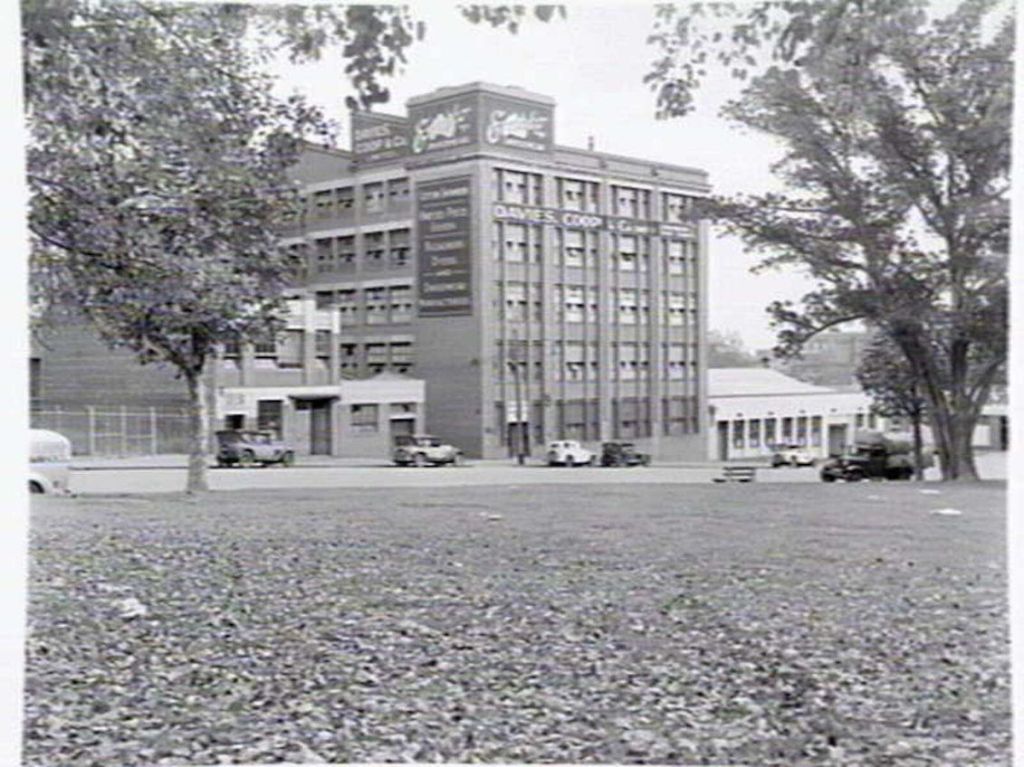
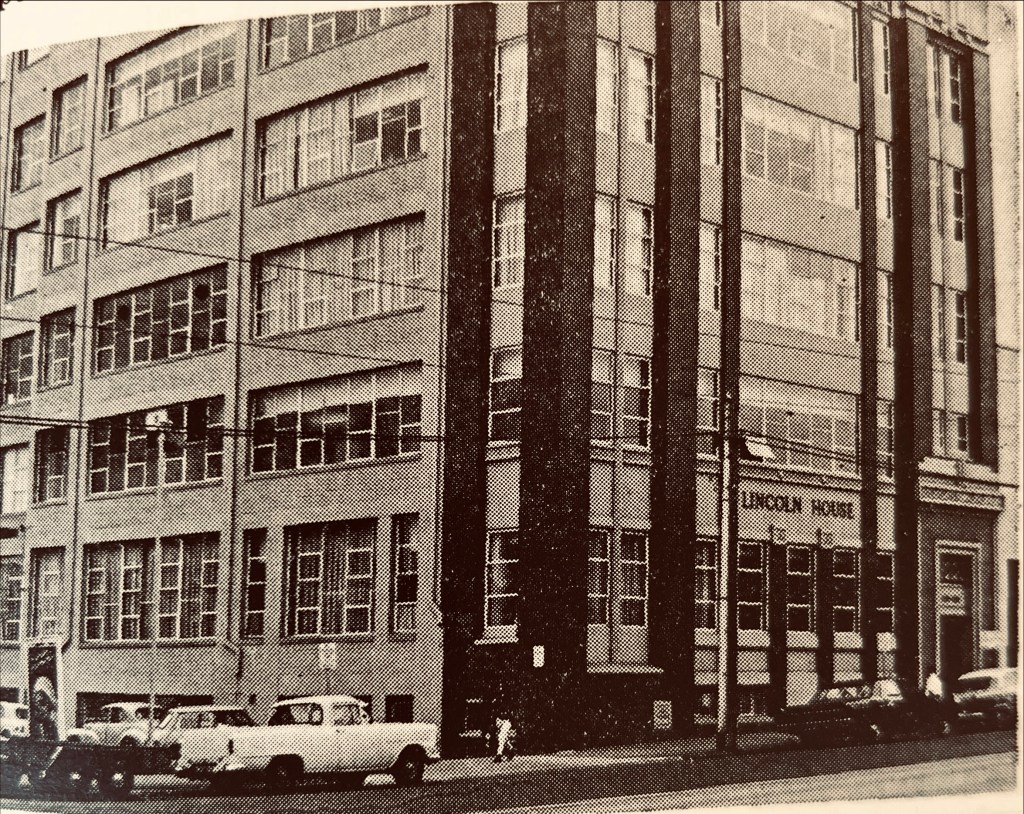
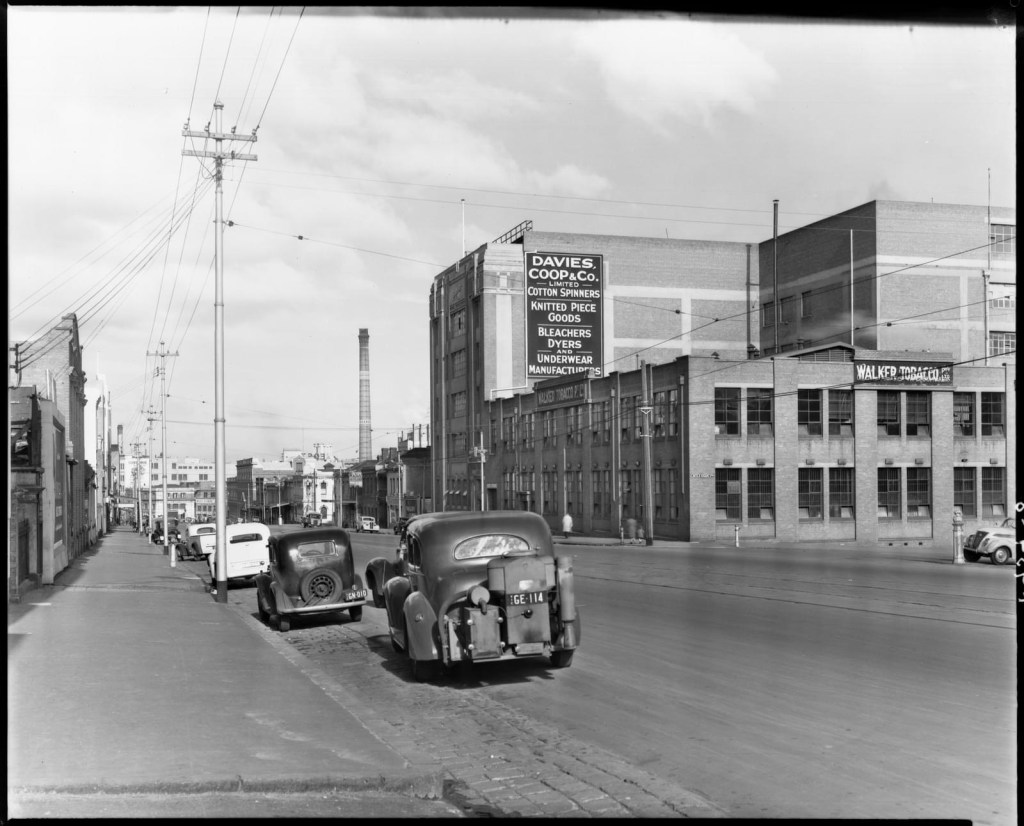
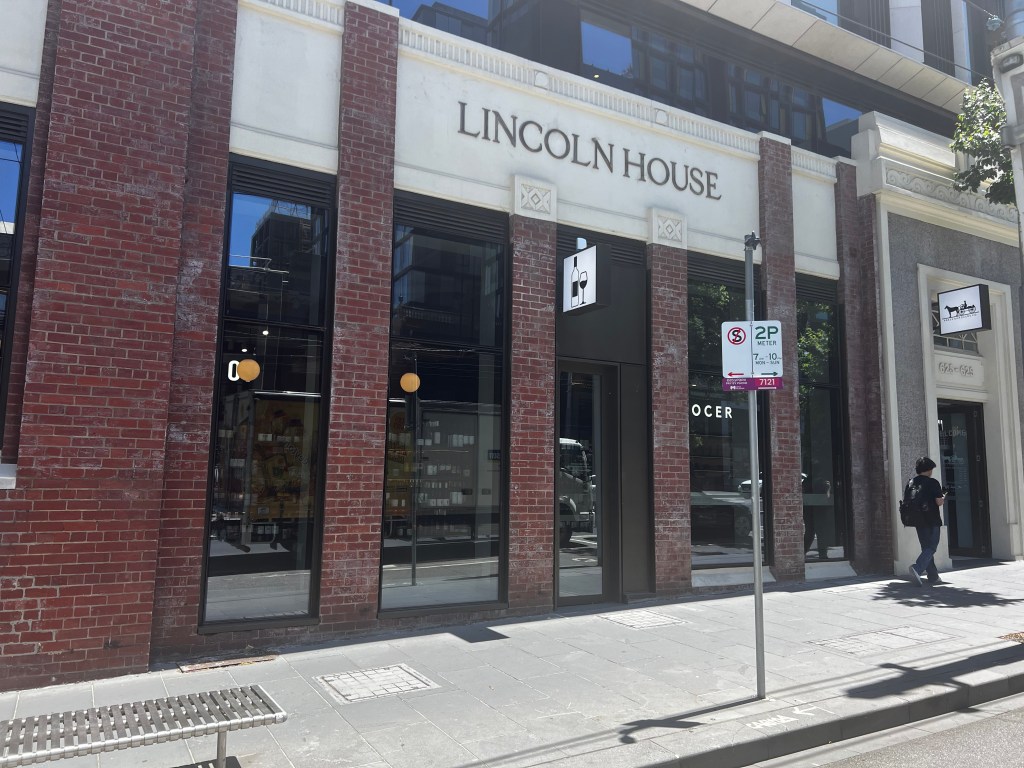
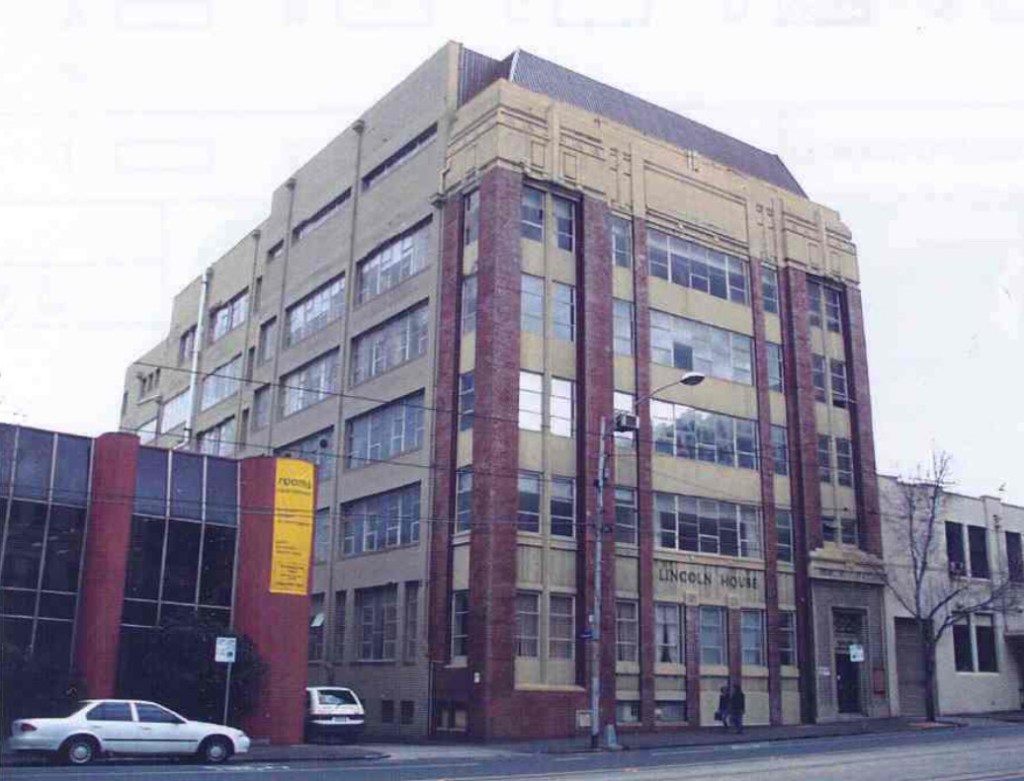
Background for photos of the Carlton Campus Building:
Originally constructed in 1933, the building at 625-629 Swanton Street began as a spinning mills factory for Davis Coop & Co. Ltd., serving the textile industry until at least 1960. By 1971, it transformed into Lincoln House, home to the Occupational Therapy and Physiotherapy Schools of Victoria and the Victorian School of Speech Therapy, later forming the Lincoln Institute.
Lincoln House exemplifies stripped Classical inter-war architecture, originally spanning five floors before the addition of a sixth. It holds local historical and aesthetic significance, marking Carlton’s industrial growth in the 20th century and its evolution into a center for education and therapy.
The Abbotsford Campus
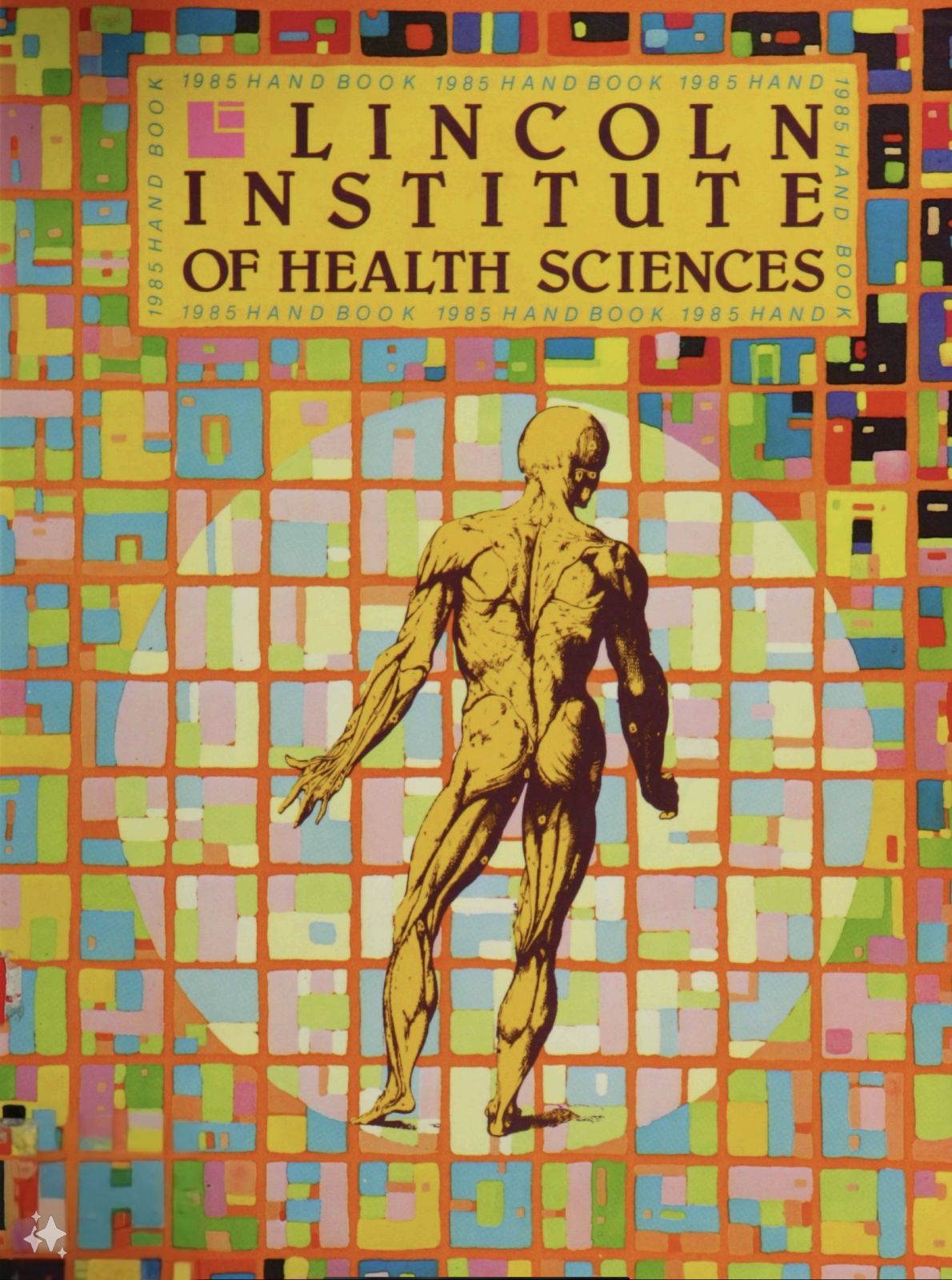
The Lincoln Institute student handbook was a source of inspiration for many, offering a visionary perspective on patient care, health, and society. This final edition of the handbook marked the end of an era at the Institute.
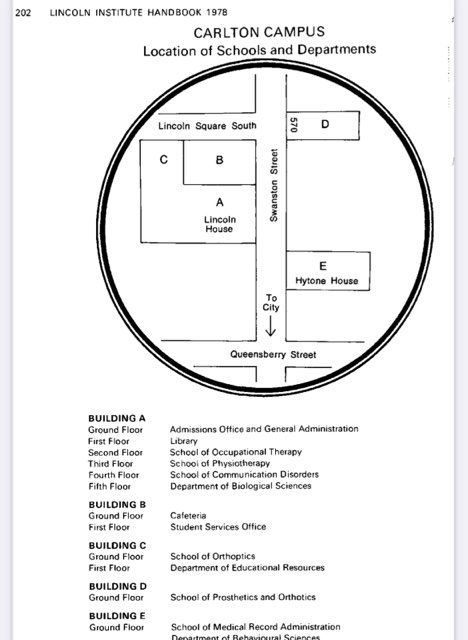
Situated at 625 Swanson Street, the main building of Carlton Campus was surrounded by offices and classrooms that were scattered across buildings on the opposite side of the road and Bouverie Street.
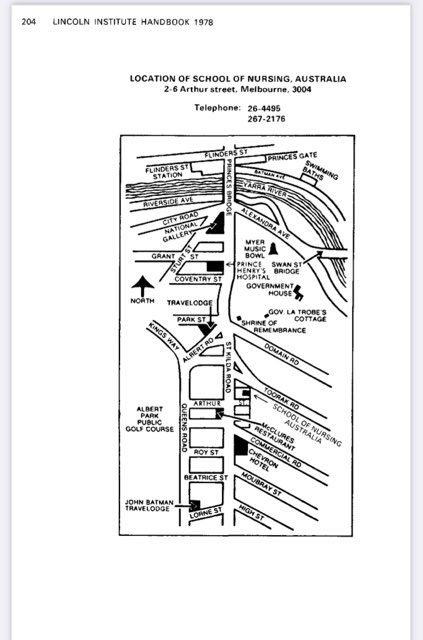
Situated at 2-6 Arthur Street, near the renowned St Kilda Road and Toorak Road, was the College of Nursing in Australia, which later became the School of Nursing at Lincoln Institute of Health Sciences.
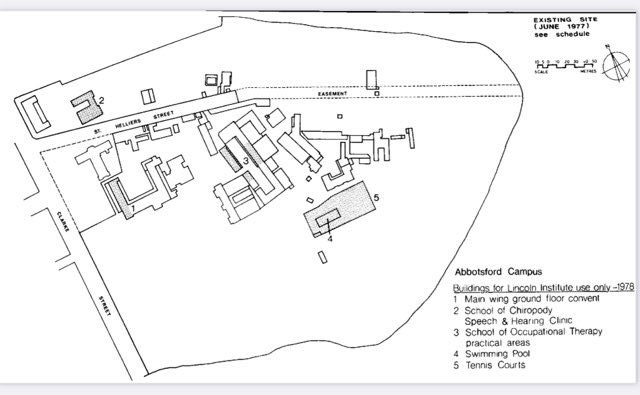
The Abbotsford Campus held significant importance as the second major campus site for the Lincoln Institute. It was situated in the refurbished picturesque old convent building on St Helliers Street in Abbotsford, and was home to the Schools of nursing, podiatry, and a Speech and Hearing clinic.
Important Sources
Highlighting the inspiring narratives of the Schools associated with the Lincoln Institute and the significant accomplishments of women who have played a vital role in advancing the professionalization of health sciences.
Cameron, Betty Sutherland 1976. The Work of Our Hands: A History of The Occupational Therapy School of Victoria. Gippsland Times Commercial Printing, Sale, Victoria.
Hamilton, Helen 2021. Patricia Voilet Slater: A Remarkable Leader in the Nursing Profession in Changing Times. PhD thesis, Federation University Australia, Ballarat, Victoria. Weblink Reference
McMeeken, Joan M. 2015, Science in our Hands: Physiotherapy at the University of Melbourne 1995-2010. PhD thesis, Faculty of Medicine, Dentistry and Health Sciences, University of Melbourne, Melbourne. Weblink Reference
 Lincoln Institute of Health Sciences